People Don't Buy Products. They Buy Emotional Shortcuts.
What's really happening inside your customer's brain and how brands win when they understand it.
Think about the last thing you bought without overthinking it. A coffee brand. A pair of sneakers. A skincare product you've been loyal to for years. Now ask yourself honestly — did you analyse ingredient lists, compare unit prices, and run a cost-benefit calculation? Probably not.
You felt something. And you bought.
This isn't a flaw in human decision-making. It's the entire operating system. And for brands that understand consumer psychology in marketing, this insight changes everything.
"People don't buy products. They buy better versions of themselves — and your brand is the shortcut to get there."
Neuroscientist Antonio Damasio's research showed that people with damage to the emotional centres of their brain — despite having perfectly intact logic — struggled to make even simple decisions. Without emotion, there is no decision. None.
Harvard Business School professor Gerald Zaltman estimates that 95% of purchasing decisions are made subconsciously. Your customer's rational brain shows up only to justify what the emotional brain already decided. That's not a statistic to worry about — it's the most important piece of emotional branding strategy you'll ever read.
95% of purchases decided subconsciously
3x more persuasive: emotion over information
7 sec to form a brand impression
An emotional shortcut — or what psychologists call a heuristic — is a mental rule your brain uses to make fast decisions without burning energy. In the context of brand psychology, it's the feeling a brand triggers that says: "This is right. This is for me. This is safe to choose."
When someone reaches for Apple over a technically superior competitor, or pays three times more for a Starbucks coffee they could brew at home — that's an emotional shortcut at work. The product is almost beside the point.
Common emotional shortcuts customers buy
Identity — "This brand reflects who I am (or who I want to be)"
Trust — "I don't have to think twice. This brand never lets me down."
Belonging — "People like me choose this."
Safety — "This is the reliable, low-risk choice."
Status — "This signals something about my taste or success."
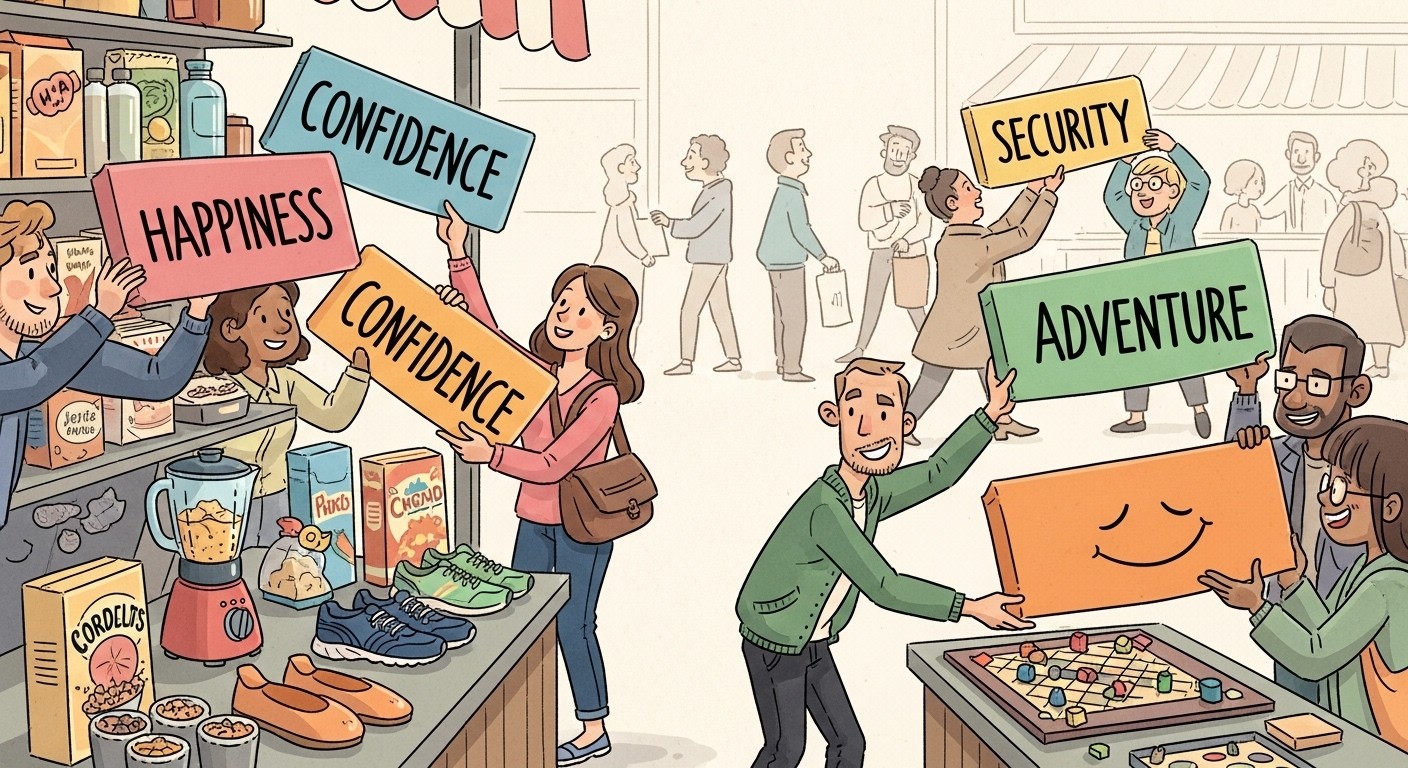
Here's the uncomfortable truth for most businesses: no one cares about your features. Not really. They care about what those features do to how they feel. A gym doesn't sell treadmills — it sells confidence. A skincare brand doesn't sell serums — it sells self-worth. A luxury car brand doesn't sell horsepower — it sells the quiet thrill of arrival.
This is why brand storytelling is not just a nice-to-have — it's the actual product. The narrative your brand tells is the shortcut customers reach for when they make a purchase. Brands with compelling stories don't just win customers. They create believers.
Think about how Nike's "Just Do It" isn't about shoes. It's a direct line to your inner athlete — the person you're trying to become. That's an emotional shortcut engineered to perfection. And it's why Nike commands loyalty that a better-cushioned sneaker from an unknown brand simply cannot replicate.
Your visual brand — your colours, typography, logo, imagery — is not decoration. It's emotional communication happening before a single word is read. Research in colour psychology shows that colour alone accounts for up to 90% of first impressions in consumer brand perception.
A muted, earthy palette says: organic, trustworthy, slow-made. A sharp black-and-gold palette says: premium, aspirational, powerful. Your visual identity is a shortcut decoder — it tells your customer's brain which emotional drawer to open before they've processed a single benefit you offer.
What your brand visuals silently communicate
Color — the fastest emotional trigger before language kicks in
Typography — signals personality: playful, serious, bold, refined
Logo simplicity — reduces cognitive load, builds unconscious trust
Imagery style — mirrors or aspirationally elevates your customer's identity
Consistency — the single greatest driver of brand trust over time
Understanding emotional triggers in branding is only step one. The real competitive edge comes when you deliberately architect those shortcuts into your brand from the inside out.
Start with identity, not product. Before you design a logo or write a tagline, ask: who does my customer want to become? What version of themselves are they reaching for? Your brand should be the bridge to that person.
Nail your brand voice. The way your brand speaks — on Instagram, in emails, on your website — should trigger a consistent emotional state. Warm and familiar. Confident and authoritative. Witty and irreverent. Whichever you choose, commit. Inconsistency kills emotional shortcuts — it forces the brain to think again instead of trust automatically.
Create rituals and recognition. The fizz of a freshly opened Coca-Cola. The signature scent inside a Westin hotel lobby. The unboxing of an Apple product. These are manufactured emotional brand triggers — sensory shortcuts that condition loyalty before the product is even used. What's your version?
Make your customer the hero, not your brand. The biggest mistake brands make in emotional marketing strategy is centering themselves in the story. Your brand is not the hero. Your customer is. You are the guide — Gandalf, not Frodo. The moment your messaging shifts from "look at how great we are" to "look at how great you could become," your conversion rates will follow.
We live in an era of infinite choice and shrinking attention. The average consumer sees thousands of brand messages a day. In this environment, logic is a liability. Information overwhelms. But a feeling — a genuine, resonant emotional connection — cuts through in seconds.
The brands winning in 2025 are not the ones with the best product specs. They're the ones who've mastered emotional brand positioning — who know exactly which emotional shortcut to trigger, when, and how. They've stopped selling features and started selling transformation.
"Your brand doesn't live in your pitch deck. It lives in the feeling your customer gets when they think of you."
The bottom line? Emotional branding is not manipulation — it's alignment. When your brand's values, story, and visual identity genuinely reflect what your customer aspires to feel, you stop competing on price and start competing on connection. And connection is the one thing no competitor can copy.Your brand should make people feel something.
We don't just build good-looking brands — we design emotional shortcuts that turn strangers into loyal customers. If you're ready to build a brand that people actually care about,
let's talk.